Posts

Paracetamol: Drug Stories Part-III

Image
  Discovery of Acetaminophen Acetamiophen is an analgesic and antipyretic agent with no anti-inflammatory action. Discovery of acetaminophen, more commonly known as paracetamol makes an interesting story. Discovery of paracetamol can be said to be a culmination of Serendipity, scientific acumen and diligence.                                                                                  Photo by  James Yarema  on  Unsplash   Industrial revolution brought a huge surge in commercial synthesis of many compounds, especially the dyes. There being a limited knowledge about biology, and a booming chemical industry led to testing of numerous compounds for various activities. The choice of activity to be studied was based more on...
Aspirin: Drug Stories Part-II

Image
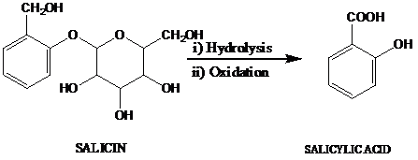
  Aspirin The chemical name of aspirin is acetyl salicylic acid. Introduced into therapeutics in 1897, it has successfully completed 125 years and still holds the scientists and doctors in awe over it's possible uses! We will get to these uses later. First, about the discovery…   There are accounts of usage of bark of willow tree ( Salix sp.) by many old civilisations like Assyrians, Sumerians, Egyptians and Chinese for treatment of conditions like muscular and joint pain, rheumatism and fever.   However, the first modern report about systematic experimentation on the therapeutic action of willow bark in treatment of ‘ague’ (a fever marked by paroxysms of chills, fever, and sweating that recur at regular intervals) conducted by Edward stone, a vicar in Chipping Norton, Oxfordshire was published by the Royal Society in 1763.   Reverend Edw ard had accidentally tasted willow bark and its bitterness   reminded him of chinchona bark (contains quinine) that ...

Statins: Drug Stories-Part I

Image
                                                             STATINS Cholesterol was first isolated in 1784 from gallstones by French physician-chemist François Poulletier. French chemist Michel E. Chevreul named it cholesterine (solid bile in Greek: chole for bile and stereos for solid). The correct molecular formula for cholesterol was established in 1888 Austrian botanist Friedrich Reinitzer. It took more than two decades to decipher the complex structure of cholesterol. The credit for the same goes to Heinrich O. Wieland and Adolf Windaus who successfully established the structure through their brilliant work in early 1900s. Wieland was awarded the Nobel Prize in Chemistry in 1927 and Windaus in 1928. Cholesterol became a molecule of interest in the etiology of atherosclerosis when in 1910 Windaus reported that atherosclerotic pla...